
A Balanced Life
English & Chinese Articles - AI Era
4/1/20263 min read
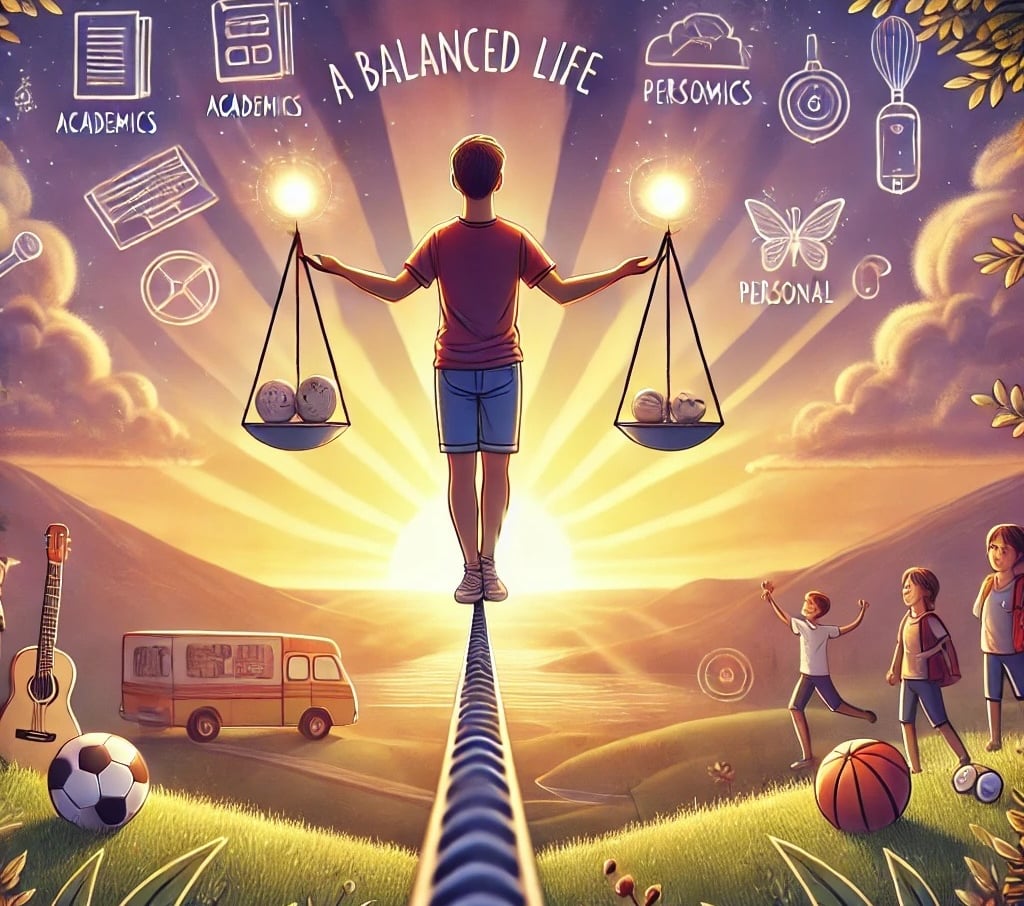
Facebook founder Mark Zuckerberg emphasizes the importance of balancing work and family. He has shared that no matter how busy his work schedule is, he makes sure to spend time with his family and maintain a fitness routine. He believes that a healthy work-life balance can improve efficiency and creativity, helping him continue to innovate in the fast-paced tech industry. While AI brings countless conveniences and changes how we learn, it also increases pressure and challenges. For high school students, in particular, we face more academic stress and an uncertain future. How can we find balance between study, rest, and entertainment in this context?
1. Create a Reasonable Schedule
In the AI era, learning tools have become more diverse, allowing us to learn online and use AI-assisted platforms to improve learning efficiency. However, this can also lead to the trap of overstudying and neglecting the importance of rest and play. Creating a schedule can help us balance study, rest, and entertainment. When making a schedule, we should consider our personal habits and learning styles. For example, some people may prefer studying in the morning, while others may be more effective at night. We should find a rhythm that works best for us to better balance study and rest.
2. Get Enough Sleep
In this fast-developing tech world, we are often drawn to our phones, computers, and other digital devices, leading to more frequent instances of staying up late. One hour before bedtime, we should avoid using phones, computers, or watching TV to prevent delaying our sleep. During busy academic periods, many high school students choose to stay up late to study. However, long-term sleep deprivation has significant negative effects on both the body and brain, not only impacting learning effectiveness but also harming physical health. According to the Centers for Disease Control and Prevention (CDC), the recommended amount of sleep varies by age group:
Children (ages 6-12): 9 to 12 hours of sleep per day.
Teenagers (ages 13-18): 8 to 10 hours of sleep per day. Adequate sleep greatly benefits emotional health, academic performance, and physical development. Teens who lack sleep are prone to mood swings, reduced concentration, and may experience increased anxiety and depression.
Adults (ages 18 and older): At least 7 hours of sleep per day.
3. Engage in Appropriate Recreational Activities
In addition to studying and resting, recreational activities are also an essential part of our lives. In the AI era, entertainment options have become more varied. Whether it’s playing video games, watching online videos, or using VR technology for immersive experiences, these new forms of entertainment attract our attention. However, excessive entertainment can distract us and lead to decreased study efficiency. Therefore, we should find appropriate recreational activities, ensuring that entertainment becomes a refreshing break rather than an escape from studying. I encourage everyone to participate in different outdoor activities like walking, running, or playing sports. These activities not only help us relax but also strengthen our bodies and promote healthy brain development. We can also enjoy family recreational activities, such as watching movies together, playing chess, or doing crafts. These activities strengthen family relationships.
4. Cultivate Good Self-Discipline
The key to balancing study, rest, and entertainment lies in our self-discipline. The AI era gives us more choices and freedom, but it also requires us to develop stronger self-management skills. Self-discipline is not about restricting freedom but about using time effectively to achieve our goals. We can start by setting small goals to gradually learn how to manage our time properly. For example, we could set a goal to study for two hours each day, followed by half an hour of entertainment. This approach can help us strike a balance between study and play.
Chinese Article 9 (文章9) - 平衡的生活
Facebook創始人馬克·祖克柏 (Mark Zuckerberg) 強調工作與家庭平衡的重要性。他曾分享每天堅持抽時間陪伴家人,無論工作多忙,也會保持健身的習慣。他相信,良好的生活平衡能提高工作效率和創造力,並幫助他在急速節奏的科技行業中持續創新。AI帶來了無數便利,改變了我們的學習方式。但隨著科技的不斷進步,壓力和挑戰也在增加。尤其對高中生來說,我們面臨著更多的學業壓力和不確定的未來。在這樣的背景下,我們如何在學習、休息和娛樂中取得平衡呢?
1. 制定合理的時間表
在AI時代,學習工具越來越多元化,我們可以通過網絡學習、使用AI輔助的教學平台來提高學習效率。然而,這也容易讓我們陷入過度學習的陷阱,忽視了休息和玩樂的重要性。制定時間表能幫助我們在學習、休息和娛樂中取得平衡。在制定時間表時,我們應該考慮個人特點和學習習慣。例如,有些人可能喜歡在早上學習,而有些人則更適合在晚上進行學習。因此,我們應該找到最適合自己的節奏,從而更好地平衡學習和休息。
2. 保持充足的睡眠
在這個科技發展迅速的時代,我們常常被手機、電腦和其他數碼設備吸引,導致熬夜現象越來越普遍。睡前一小時,我們應該避免玩手機、電腦或看電視而延遲入睡。在學業繁忙的時候,許多中學生會選擇熬夜溫習。然而,長期熬夜對身體和大腦的損害是巨大的,這不僅會影響我們的學習效果,還會損害我們的身體健康。根據美國疾病控制與預防中心 (CDC) 的建議,不同年齡段的兒童、青少年和成人需要的睡眠時間有所不同。
-兒童 (6-12歲):建議每天睡9到12小時。
- 青少年 (13-18歲):青少年需要每天8到10小時的睡眠。充足的睡眠對於我們的情緒健康、學業表現和體能發展有極大幫助。缺少睡眠的青少年容易情緒波動、專注力下降,並可能增加焦慮和抑鬱的風險 。
- 成年人 (18歲及以上):成年人應該每天至少睡7小時。
3. 適當的娛樂活動
除了學習和休息,娛樂活動也是我們生活中不可或缺的一部分。在AI時代,娛樂方式變得更加多樣化,無論是玩電腦遊戲、觀看網絡視頻,還是使用VR技術進行沉浸式體驗,這些新型娛樂方式都吸引著我們的注意力。然而,過度的娛樂也會分散我們的注意力,導致學習效率下降。因此,我們應該找到適當的娛樂活動,讓娛樂成為生活中的調劑,而不是逃避學習的方式。我鼓勵大家參加不同的戶外活動,比如散步、跑步、打球等。這些活動不僅能夠幫助我們放鬆身心,還能夠增強體質,促進大腦的健康發展。我們也可以和家人一起參加娛樂活動,比如一起看電影、下棋、做手工,這些活動能夠增進家庭關係。
4. 培養良好的自律能力
平衡學習、休息和娛樂的關鍵在於我們的自律能力。AI時代為我們提供了更多的選擇和自由,但同時也需要我們具備更強的自我管理能力。自律不是限制自由,而是為了讓我們更好地利用時間,實現自己的目標。我們可以通過設定小目標,讓自己逐步學會如何合理安排時間。例如,我們可以設定每天學習兩個小時,然後再進行半小時的娛樂活動,這樣可以幫助我們在學習和娛樂之間取得平衡。