
Cultivating Passion in Children
English & Chinese Articles - AI Era
2/1/20263 min read

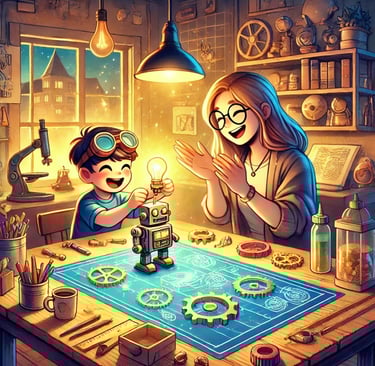
Steve Jobs, one of the founders of Apple, had a deep passion for design and technology, which greatly influenced the tech industry. He insisted on combining aesthetics with functionality and had extremely high standards for product details. Jobs once said, "You have to be passionate about what you do because that's the only way you'll have the perseverance to overcome all the difficulties." His innovative ideas not only transformed personal electronics but also redefined the entire industry. In this era of rapid AI development, parents often wonder how to cultivate their children's passion and interests in such an environment.
1. Understanding the Importance of AI Technology
Parents should have a basic understanding of artificial intelligence (AI) technology. AI is reshaping our world, from healthcare and finance to education and transportation, and is everywhere. Parents don’t need to be tech experts, but they should at least understand what AI can do and how it is changing our lives. For example, AI can analyze large datasets, enable autonomous driving, or improve learning efficiency. With this knowledge, parents can engage with their children when AI-related topics arise at school or online and guide them to consider the possibilities AI technology brings.
2. Parents as Role Models
Parents should become role models for their children. If parents show enthusiasm for learning and innovation, children are more likely to be inspired. Parents can share their learning experiences with their children and demonstrate curiosity and a spirit of exploration toward new things. By doing this, children not only learn practical skills and knowledge from their parents but are also motivated by their parents' passion, encouraging them to be more proactive in their own studies and life.
3. Encouraging Exploration of Interests and Curiosity
One key to fostering passion in children is encouraging their curiosity and spirit of exploration. In the AI era, children are exposed to vast amounts of information, meaning they have more opportunities to explore different areas of interest. Parents should support their children's freedom to explore what interests them, whether it's programming, science, art, or other subjects. For instance, if a child is interested in AI or technology, parents can provide related books, courses, or tools, allowing them to practice at home.
At the same time, parents should give their children enough space to make mistakes and try different things. Passion doesn't develop overnight; children may need to try various activities before finding something that truly motivates them. Throughout this process, parents should offer continuous encouragement, letting their children know that whatever interests they pursue, it’s all part of their growth journey.
4. Creating a Supportive Learning Environment
Parents can help create a supportive learning environment that gives children the chance to be exposed to different fields of knowledge and combine them. While school education is important, family support is equally crucial. For example, if a child is interested in math and programming, parents can encourage them to participate in coding competitions or learn how to use AI for innovation. Parents can also support by helping their children find resources or discussing topics with them.
Moreover, the family environment should be open and inclusive. Parents should avoid excessive interference or criticism of their children’s interests. If a child develops a strong interest in a particular AI technology or subject, parents should focus on their learning progress rather than placing too much pressure on them. This can help the child experience a sense of accomplishment in their studies, further strengthening their motivation and passion for learning.
5. Cultivating Critical Thinking and Innovation
Critical thinking is the ability to analyze and evaluate information, and parents can nurture their children’s creativity and passion by developing this skill. For example, a child might ask whether AI can completely replace human jobs. Parents can guide their children to think deeply about this question, discussing the strengths and limitations of AI, as well as the unique qualities humans bring in terms of innovation and emotional intelligence.
6. Focusing on Character Development and Social Responsibility
In addition to skills and knowledge, parents should emphasize their children's character development and sense of social responsibility. In the AI era, while technology is important, truly successful individuals are often those with strong character and a sense of social responsibility. Parents can teach their children how to maintain ethical awareness when using AI technologies, understand the societal impacts of technology, and learn to use it for the betterment of society. For example, I am currently developing an application for elderly care homes, aimed at saving caregivers’ time so they can focus more on caring for and attending to the elderly.
Furthermore, parents should encourage their children to work with others and learn to play a role in a team. In the AI era, interdisciplinary collaboration will become increasingly important, and children need to learn how to collaborate with people from different backgrounds and specialties. This collaborative spirit not only helps them stand out in future careers but also allows them to enjoy the learning process even more.
Chinese Article 8 (文章8) - 培養孩子的熱情
史蒂夫·喬布斯(Steve Jobs)是蘋果公司的創辦人之一,他對設計和技術的熱情深深影響了科技界。他堅持將美學與功能結合,並且對產品的細節要求極高。喬布斯曾表示:“你必須對你所做的事情充滿熱情,這樣你才有動力去克服所有的困難。” 他的創新理念不僅改變了個人電子產品,也重新定義了整個行業。在這個AI技術飛速發展的時代,父母們經常會感到困惑,如何在這樣的環境中培養孩子的熱情和興趣?
1. 了解AI技術的重要性
父母要對人工智能(AI)技術有一定的了解。AI正在重塑我們的世界,從醫療、金融教育、到交通,無處不在。父母只有了解AI對社會的影響,才能夠與孩子進行有效的溝通。這並不意味著父母需要成為技術專家,但至少要知道AI可以做什麼,以及它如何改變了我們的生活。例如,AI可以用來分析大量數據,進行自動駕駛,或者提升學習效率。這樣,當孩子在學校或互聯網上遇到AI相關的話題時,父母可以參與其中,並引導他們思考AI技術帶來的各種可能性。
2. 父母成為榜樣
父母應該成為孩子的榜樣。如果父母自己對學習和創新充滿熱情,那麼孩子也更有可能被感染。父母可以與孩子分享自己的學習經歷,並展示出對新事物的好奇心和探索精神。這樣,孩子不僅能夠從父母身上學到實際的技能和知識,還能夠受到父母熱情的激勵,從而在自己的學習和生活中表現出更多的積極性。
3. 鼓勵探索興趣和好奇心
培養孩子熱情的關鍵之一是鼓勵他們的好奇心和探索精神。在AI世代,孩子接觸的信息量巨大,這也意味著他們有更多的機會去探索不同的興趣領域。父母應該支持孩子自由探索他們感興趣的事物,無論是編程、科學、藝術還是其他學科。例如,如果孩子對AI或科技感興趣,父母可以為他們提供一些相關的書籍、課程或工具,讓他們在家裡也能夠進行實踐。
同時,父母應該給予孩子足夠的空間來犯錯和嘗試不同的事物。熱情並不是一蹴而就的,孩子可能需要嘗試多種不同的活動,才能找到真正讓他們感到充滿動力的事物。在這個過程中,父母應該提供持續的鼓勵,讓孩子知道,無論他們選擇什麼興趣,這些都是成長過程中的一部分。
4. 創造支持性的學習環境
父母可以幫助孩子創造一個支持性的學習環境,讓他們有機會接觸到不同領域的知識,並將這些知識結合起來。這個過程中,學校的教育固然重要,但家庭的支持也是至關重要的。例如,孩子可能對數學和編寫程式有興趣,父母可以幫助他們參加相關的編寫程式競賽,或者鼓勵他們學習如何利用AI進行創新和創造。父母更可以在這個過程中提供支持,例如幫助孩子尋找資源,或與他們一起討論。
此外,家庭環境應該是開放和包容的,父母應該避免對孩子的興趣進行過多的干預或批評。如果孩子對某個AI技術或學科產生濃厚的興趣,父母應該更多地關注他們的學習進程,而不是給他們施加過多的壓力。這樣可以讓孩子在學習中感受到成就感,進而增強他們的學習動力和熱情。
5. 培養批判性思維和創新能力
批判性思維是一種分析和評估信息的能力,父母可以通過培養孩子的批判性思維來激發他們的創造力和熱情。例如,孩子可能會問,AI能否完全取代人類的工作?父母可以引導孩子深入思考這個問題,討論AI的優勢和局限性,以及人類在創新和情感智慧方面的獨特之處。
6. 注重人格發展和社會責任感
除了技能和知識,父母還應該注重孩子的人格發展和社會責任感。在AI時代,技術雖然重要,但真正成功的人往往是那些擁有良好品格和社會責任感的人。父母可以教導孩子如何在使用AI技術時保持道德意識,理解技術對社會的影響,並學會用技術為社會做出貢獻。例如,我現在正編寫一個應用程式給老人院,目的是為了減省護理人員的時間,讓他們能夠騰出更多時間去照顧和關心老人家。
此外,父母應該鼓勵孩子與他人合作,學會在團隊中發揮作用。在AI時代,跨學科的合作將變得越來越重要,孩子需要學會如何與不同背景和專業的人進行協作。這樣的合作精神不僅有助於他們在未來的職場中脫穎而出,還可以讓他們在過程中收穫更多的學習樂趣。