
Resilience
English & Chinese Articles - AI Era
2/1/20253 min read
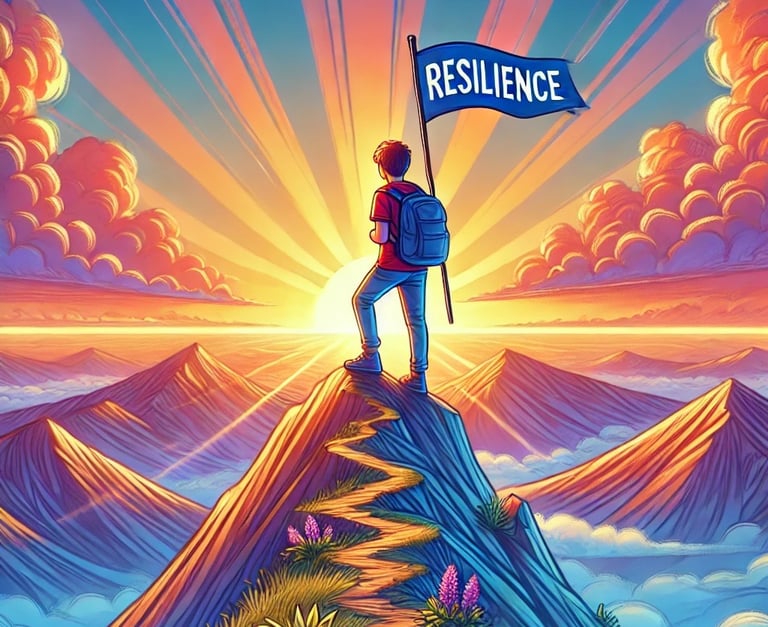
Can you guess who this person is? He sent out 100 resumes but wasn't hired. While others took 5 years complete high school, he took 7 years. He failed to get into prestigious middle and high schools and also failed the college entrance exam three times. When he applied for a job, 25 people were interviewed, and 24 were hired—he was the only one rejected. He also applied to be a police officer, and out of 5 candidates, he was the only one not selected. In the early stages of starting his business, he met over 30 investors, but none were willing to invest. Yet, this man is none other than Jack Ma, the founder of Alibaba. He led his team in continuous innovation, ultimately making Alibaba one of the largest e-commerce platforms in the world. He never saw these setbacks as failures, only as "temporary not-yets," and each obstacle brought him one step closer to success.
In the age of Artificial Intelligence (AI), young people face many opportunities and challenges.
Learning and future career planning have become increasingly complex, and we may encounter
failures, setbacks, and even moments of confusion. Therefore, resilience has become one of the
core qualities we need. Resilience is not only about persistence in the face of difficulty but also
about how to get back up after failure and learn valuable lessons from it.
1. Encourage children to take risks and embrace challenges
Parents should encourage their children to face challenges head-on, whether they are academic
difficulties or life setbacks. The development of AI technology brings us endless possibilities, but
also many unknown challenges. Children may encounter many technical obstacles when learning
to code, analyze data, or participate in AI projects. At such times, parents should remind them
that challenges are part of growth, and only by taking risks can they truly learn.
2. Teach learning from failure
In the AI era, the pace of technological change is fast, and failure is inevitable. Parents can
discuss failures with their children and guide them to reflect on the reasons behind them. For
example, when a child fails in a school AI competition, parents can help them analyze the
reasons for failure and encourage them to make improvements rather than dwell on the setback.
This way, children learn how to draw lessons from failure and approach future challenges with
more confidence. Thomas Edison, who went through thousands of failures while inventing the
light bulb, said that he didn’t see those experiences as failures but as discovering over a thousand
ways that didn’t work.
3. Foster a growth mindset
A growth mindset is a key tool in cultivating resilience. This mindset emphasizes that people's
abilities and intelligence can be gradually improved through effort and learning, rather than
being fixed. In the AI era, with technology advancing at a rapid pace, children must possess the
ability to continuously learn and adapt to new technologies. Children with a growth mindset are
better equipped to face challenges because they believe in their ability to improve through effort.
4. Provide balanced pressure and support
Parents should help children find the right balance between pressure and support. Excessive
pressure can lead to a fear of failure, stifling their motivation to act. On the other hand, moderate
pressure, combined with support, can stimulate a child's potential and give them more drive
when facing difficulties. Parents should actively communicate with their children, understand
their struggles, and help them develop achievable plans. This way, children won’t feel alone when confronting challenges and will be more resilient in their efforts.
5. Encourage long-term goals and patience
Resilience also involves patience and the ability to focus on long-term goals. The development of
AI technology often requires long-term research and experimentation, which may cause children
to feel frustrated during the process. Parents should help their children set long-term goals and
teach them how to remain patient and focused throughout the journey toward achieving these
goals. Parents can discuss their children's long-term goals with them and help outline specific
steps to reach those goals. When children feel discouraged, parents should remind them thatlong-term success takes time, and with consistent effort, they will eventually achieve their
dreams.
Chinese Article 2 (文章2) - 抗「逆」能力
請大家猜猜這個人是誰 - 他寄出了100份履歷卻沒被錄用,別人用了5年時間,他卻用了7年時間才完成中學學業。他嘗試考進重點初中和重點高中都失敗,考大學試也失敗了3次。找工作時,25人面試, 結果24人被錄用,他是唯一一個沒被錄用的。他還申請過當警察,5個同學中,只有他沒被選上。創業初期,他見了超過30個投資人,但沒有一個願意投資。然而,這個人就是阿里巴巴的創辦人—馬雲 (Jack Ma),他帶領團隊不斷創新,最終使阿里巴巴成為全球最大的電子商務平台之一。他從不認為這些挫折是失敗,只是「暫時未成功」,每次挫折都讓他離成功更近一步。
在人工智能(AI)時代,青年人面對許多機遇與挑戰。學習和未來的職業規劃變得越來越複雜,我們可能會遭遇失敗、挫折,甚至感到迷茫。因此,抗逆能力成為了我們需要具備的核心素質之一。抗逆能力不僅是面對困難時的堅持,更是如何在失敗後重新站起來,並從中學到寶貴經驗。
1. 鼓勵孩子勇於嘗試,接受挑戰
父母應該鼓勵孩子勇敢面對挑戰,無論是學業上的困難還是生活中的挫折。AI技術的發展給我們帶來了無限的可能性,但同時也帶來了許多未知的挑戰。孩子們在學習編寫程式、數據分析或參與AI項目時,可能會遇到許多技術上的障礙。這時,父母應該提醒他們,挑戰是成長的一部分,只有勇於嘗試,才能真正學到東西。
2. 教導從失敗中學習
在AI時代,技術的變化速度很快,失敗變得無可避免。父母可以與孩子討論他們所經歷的失敗,並引導他們反思失敗的原因。例如,當孩子在學校的AI競賽中失敗時,父母可以幫助他們分析比賽的失敗原因,並激勵他們進行改進,而不是讓他們陷入失敗的陰影中。這樣,孩子便學會如何從失敗中吸取教訓,並且在未來的挑戰中表現得更加自信。托馬斯·愛迪生 (Thomas Edison) 在發明電燈泡的過程中經歷了數千次失敗。當被問及如何面對如此多的失敗時,愛迪生表示,他並不認為這是失敗,而是發現了一千多種無效的方法。
3. 建立成長型思維模式
成長型思維(Growth mindset)是培養抗逆能力的重要工具。這種思維模式強調,人們的能力和智力是可以通過努力和學習逐漸提升的,而不是固定不變。在AI世代,技術更新速度越來越快,孩子們必須具備持續學習和適應新技術的能力。擁有成長型思維的孩子能夠更好地面對挑戰,因為他們相信自己有能力通過努力取得進步。
4. 給予適度的壓力與支持
父母應該幫助孩子找到壓力與支持的平衡點。過度的壓力會讓孩子對失敗產生恐懼,從而抑制他們的行動力。相反,適度的壓力加上支持,能夠激發孩子的潛力,讓他們在面對困難時更有動力。父母應該主動與孩子交流,了解他們的困難,並幫助他們制定可行的計劃。這樣,孩子在面對困難時不會感到孤單,並且能夠更加堅持不懈。
5. 鼓勵長期目標與耐心
抗逆能力還包括耐心和專注於長期目標的能力。AI技術的發展往往需要經歷長期的研究和試驗,孩子們在這個過程中可能會感到挫折。父母應該幫助孩子設定長期目標,並且教導他們如何在實現這些目標的過程中保持耐心和專注。父母可以與孩子一起討論他們的長期目標,並幫助他們制定實現目標的具體步驟。當孩子感到沮喪時,父母應該提醒他們,長期的成功需要時間,並且只要保持努力,最終會取得成果。